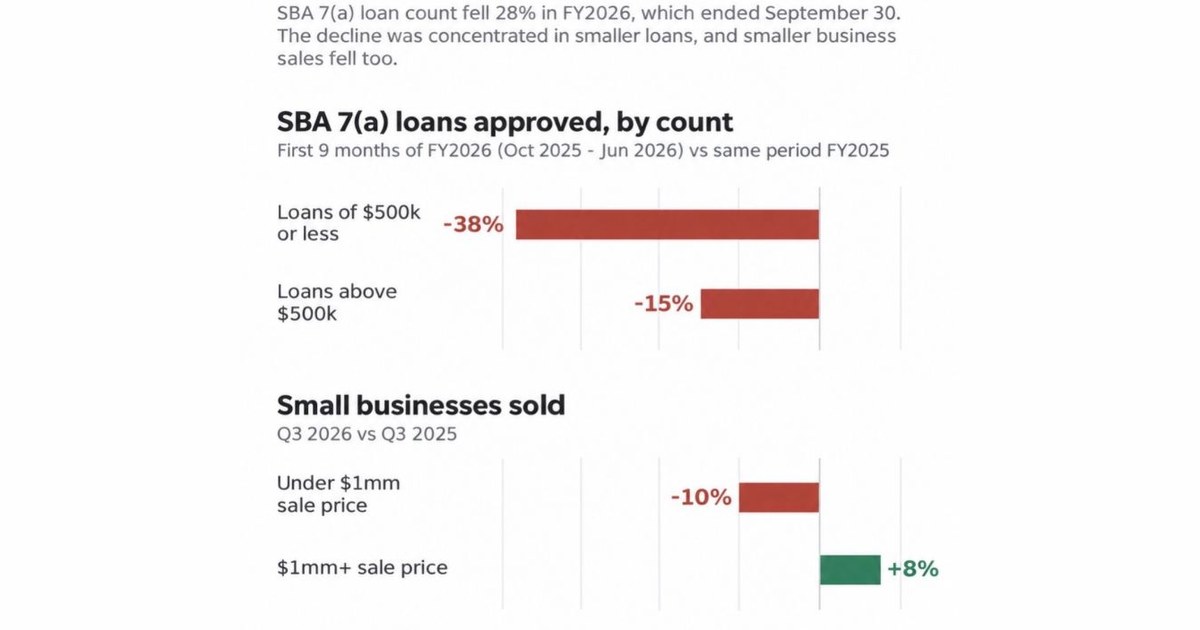
As of September 2026, SBA 7(a) approvals fell to 56,130 loans from a record of 77,600 during the same period in 2025. That is down 28% by count and 12% by dollars. The gap between those two numbers is the story: the program is still lending, but it is making fewer small loans.
A program that kept changing
The 7(a) program has changed several times in that window:
- March 2025: fees went up.
- June 2025: a new SOP took effect.
- March 2026: citizenship and small-loan underwriting rules changed.
- October 1, 2026: another SOP took effect.
Rates didn't help either. The Fed held through the summer and then hiked in September.
The decline wasn't even
In the first nine months of the fiscal year (through June), loans of $500k or less fell 38% by count, versus 15% for larger loans. The October 2025 government shutdown, and the rush to close before it, muddy the timing, but the direction is still telling. The smallest borrowers, who are often buying the smallest businesses, lost the most access.
For what SBA loan-level data does and doesn't tell you about acquisitions that fail, see what SBA loan charge-off data shows.
What the deal side shows
BizBuySell's Q3 2026 data adds color on the deal side:
- Small deals shrinking. Sales of businesses under $1mm fell 10% year over year, while $1mm+ deals rose 8% to a record 22% of transactions.
- Better terms higher up. $1mm+ deals closed at 3.73x cash flow and 100.8% of asking price, versus 2.30x and 93.6% below $1mm.
- More institutional buyers. Brokers report more private equity (31%), search funds (32%) and family offices (20%) in their deals than a year ago.
What stands out to me is the survey trend. Buyers are leaning on SBA more, not less: 78% now expect to use it, up from 67% in Q1. Brokers keep flagging friction. In Q2 2025, 41% reported delays from new SBA policies. This quarter, 47% cited SBA or lender policy changes, and SBA funding is now the top financing obstacle they report.
My read
A good part of the small-deal slowdown looks like a financing story, while capital keeps flowing into the $1mm+ band. If that's right, smaller deals will need alternative financing sources, policy shifts, macro changes or a mix of the three.
For buyers and the investors backing them, a few practical implications:
- Plan for a longer, less certain SBA timeline on small deals. If the deal depends on a loan of $500k or less, build in time for underwriting changes and have a backup lender in the conversation early.
- Expect more structure below $1mm. With bank debt harder to get, seller financing and earnouts are likely to carry more of the price. Our comparison of SBA loans and seller financing covers the trade-offs.
- Expect more competition above $1mm. More private equity, search funds and family offices are showing up in broker deals, and those deals are closing at or above asking price. That shows up in multiples. See how LOI prices compare with closing multiples.
- Watch debt service on floating-rate loans. Many 7(a) loans float with prime, so a hike flows straight into the borrower's interest bill. We wrote about where that pressure leads in small business Chapter 11 filings.
I'm curious what others are seeing. What's driving the drop in sub-$1mm business sales? If you want our deal sheet and future market notes, join SMB Investor Network at smbinvestornetwork.com.
Sources
- U.S. Small Business Administration, 7(a) loan approval reporting for FY2026 (through September 30, 2026) and FY2025, including approvals by loan size for the first nine months of each fiscal year.
- BizBuySell, Insight Report, Q3 2026: transactions by sale price, cash flow multiples, sale-to-ask ratios, buyer mix and broker survey.